Is Seakeeper Ride Worth It? Every Wave, Handled
Is Seakeeper Ride worth it? If that question is on your mind, you’re probably looking at making an upgrade to your boat and wondering whether you’ll actually feel the difference. Straight answer: yes.
Seakeeper Ride gives you up to 70% less pitch, roll, and yaw underway, and for most boaters who do anything beyond idling around a protected cove on glassy mornings, the Seakeeper Ride system gives you comfort, control, and confidence on every run.
The first-of-its-kind Vessel Attitude Control System™ (VACS)
Seakeeper Ride is an underway stabilization system that mounts to your transom and keeps your boat stable, level, and pointed while you’re moving.
It’s the first and only Vessel Attitude Control System™ (VACS) on the market. In this sense, “attitude” means how your boat sits across three axes: pitch (the bow rising and dropping), roll (the side-to-side rock), and yaw (the bow swinging left and right). You might’ve considered (or already have) trim tabs, but they only deal with running angle. Seakeeper Ride takes care of that, AND dynamic underway motions.
The controllers are located on both sides of the transom, below the waterline, reading the water with inertial sensors. The moment motion is detected, the system deploys its rotary blades to create lift and cancel the movement before it’s felt onboard.
Seakeeper Ride makes 100 adjustments every second, each one calibrated precisely to respond before motion is felt onboard.
The system is also designed to ensure there’s one less task on the captain’s plate. There are no buttons to push and nothing to trim. You turn the key and drive. The payoff is up to 70% less pitch and roll underway, in every heading and sea condition.
3 Reasons Why Seakeeper Ride is worth it
Faster than the other options—on all three axes.
Speed sets Seakeeper Ride apart. The rotary blades deploy at up to 300 mm per second and make 100 adjustments every second, all on a compact design that draws just 7 to 10 amps.
That speed and proprietary control software and hardware are what let one system handle pitch, roll, and yaw at once, where other setups, like traditional trim tabs, are left addressing the motion once you & your crew have already felt it.
A more comfortable Ride, literally.
A long offshore run on a boat that’s pounding against choppy water isn’t exactly enjoyable. The fatigue from one day in conditions like that is bad enough, but years of it can compound into meaningful damage. The wear and tear on a boater’s body is worth considering when judging the value of a more stable ride.
Better gas mileage & speed.
When a boat isn’t slamming up and down on the waves, it can run faster and use fuel more efficiently. That’s backed by simple physics. So, a boat that’s running Seakeeper Ride can be expected to get where it’s going sooner and use less gas getting there.
“The results were nothing short of incredible. Also picked up more than 2 kts of speed. This is game-changing stuff.”
Owner of 57 Spencer, Perra Mala
Does the Seakeeper Ride really work?
Yes, and there’s performance data to prove it. Out on the water, Seakeeper Ride commonly delivers up to 70% less pitch and roll across all headings and sea conditions.
Seakeeper ran three identical boats side by side, each with a different transom-mounted system, over the same course in five sea headings. Against the bare hull, Seakeeper Ride cut 32% of pitch and 28% of roll. Lenco Pro Control Auto managed 11% and 2%. Zipwake came in at 4% and 4%.
When Zipwake later launched its Pro model, Seakeeper reran the test, and Seakeeper Ride reduced 55% of pitch and 30% of roll, against Zipwake Pro’s 7% and 3%.
Seakeeper invited Ben Stein of Panbo, an independent marine-tech publication, to observe the entire test and review the raw data. His takeaway was blunt: the results weren’t close, and Seakeeper Ride outperformed all systems in every condition and measurement.
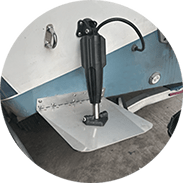
Lenco
Pro Control Auto
11%
of pitch eliminated
2%
of roll eliminated
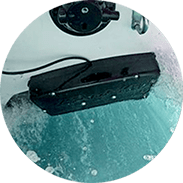
Zipwake
4%
of pitch eliminated
4%
of roll eliminated
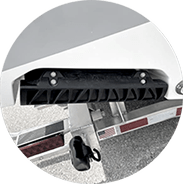
Seakeeper Ride

32%
of pitch eliminated
28%
of roll eliminated
Testing was conducted on March 20, 2025. Results represent average pitch and roll elimination across three separate testing days vs. bare hull. See the full comparison →
So, is Seakeeper Ride worth it?
For most boaters, Seakeeper Ride is worth it for comfort, confidence, and even your fuel bill.
Seakeeper Ride is for you if:
- You boat offshore or in open water where chop and swell are part of the deal
- You push through rough seas to reach your preferred fishing grounds
- You bring family, friends, or clients aboard and want them comfortable the whole way
- You want more usable days a season instead of calling off runs because the wind kicked up
- You'd like an easier day on your body, with less pounding and less fatigue
- You want the latest and greatest innovative tech available for your boat
So if those are true, the question stops being whether it's worth it and becomes which model fits your boat.
FAQs
Does Seakeeper Ride affect top speed?
It can, but maybe not the way you're thinking. In Seakeeper's testing, many boats picked up speed and fuel efficiency once pitch was under control and the hull stopped fighting the water.
Who are Seakeeper Ride's competitors?
Seakeeper Ride goes up against transom-mounted trim control, which falls into two groups. First are manual trim tabs, the fixed plates an operator adjusts by hand. Second are active trim and interceptor systems that adjust on their own, including Zipwake, Humphree's interceptors, and Lenco Pro Control Auto. Seakeeper Ride outperformed these systems in head-to-head testing because it corrects motion faster and controls all three axes at once.
Which is better, Zipwake or Seakeeper Ride?
From the results of our testing, Seakeeper Ride, by a wide margin. In a side-by-side run against the bare hull, Seakeeper Ride cut 32% of pitch and 28% of roll, while Zipwake managed 4% and 4%. After Zipwake released its Pro model, Seakeeper reran the comparison: Seakeeper Ride reduced 55% of pitch and 30% of roll, against Zipwake Pro's 7% and 3%. Seakeeper Ride's actuators move about 20 times faster than Zipwake and can correct a wave before you feel it.
Does Seakeeper Ride replace trim tabs?
Yes. Seakeeper Ride is designed to take the place of your trim tabs and do more than they can. It creates lift at the transom the way a trim tab does, but it responds automatically 100 times a second and controls pitch, roll, and yaw. It's a category of its own: the only Vessel Attitude Control System™ (VACS) on the market.
What is the difference between Seakeeper Gyro and Seakeeper Ride?
Seakeeper Gyro and Seakeeper Ride solve different problems. A Seakeeper gyro spins a flywheel enclosed in a vacuum-sealed sphere to counteract roll, at anchor and underway. Seakeeper Ride manages pitch, roll, and yaw while you're moving.
Seakeeper Ride is great on its own, but coupled with a Seakeeper gyro, it's even better. Together, they form one unified intelligent system that communicates and adapts its control decisions in real time to deliver unparalleled underway pitch, roll, and yaw stabilization.
Stop Bracing. Start Boating.
Seakeeper Ride gives you up to 70% less pitch and roll underway, better control in every heading, and more days you'll want to spend on the water.
If you're ready for One Hell of a Ride™, explore the Seakeeper Ride lineup to find the model for your boat or schedule a demo.