Why would I need more than one Seakeeper?
If you’ve read our article Seakeeper Sizing and Performance, you’ll know that there’s more to determining which Seakeeper is right for your boat than just the boat’s length. There are a lot of factors that go into determining that one 45-foot vessel should have a Seakeeper 5 while another should opt for the Seakeeper 6. As boats get larger and larger, there are more options for stabilization, but let’s backtrack a little and figure out the difference between a Seakeeper 5 and a Seakeeper 6.
IT’S ALL IN THE NAME
We name each Seakeeper unit based on its stabilizing power, which is measured in angular momentum (Newton meter seconds, or N-m-s). Read more about that in our article Time’s Up: Angular Momentum > Torque.
- Seakeeper 1 – 1,000 N-m-s
- Seakeeper 2 – 2,000 N-m-s
- Seakeeper 3 – 3,000 N-m-s
- Seakeeper 4 – 4,000 N-m-s
- Seakeeper 4.5 – 4,500 N-m-s
- Seakeeper 5 – 5,000 N-m-s
- Seakeeper 6 – 6,000 N-m-s
- Seakeeper 9 – 9,000 N-m-s
- Seakeeper 18 – 18,000 N-m-s
- Seakeeper 26 – 26,000 N-m-s
- Seakeeper 35 – 35,000 N-m-s
- Seakeeper 40 – 40,000 N-m-s
So, with this, you can see that the Seakeeper 6 is twice as powerful as the Seakeeper 3; the Seakeeper 9 is three times more powerful than the Seakeeper 3, and so on.
READY FOR SUM MATH?
Seakeepers work great alone, but they can also work together. Think about a group project in school. You could take on the full workload by yourself, or you can split it up between more members, giving each person some of the work. Seakeepers work the same way, because they can be combined for greater power. You just have to add up the units’ angular momentum.
For example, two Seakeeper 3 units will have the exact same stabilizing power as one Seakeeper 6 (3+3=6). You don’t have to add them to match another existing unit, though. You could simply add a Seakeeper 2 (2,000 N-m-s) to a boat with an existing Seakeeper 18 (18,000 N-m-s) to get 20,000 N-m-s of force (the Seakeeper 20 doesn’t exist).
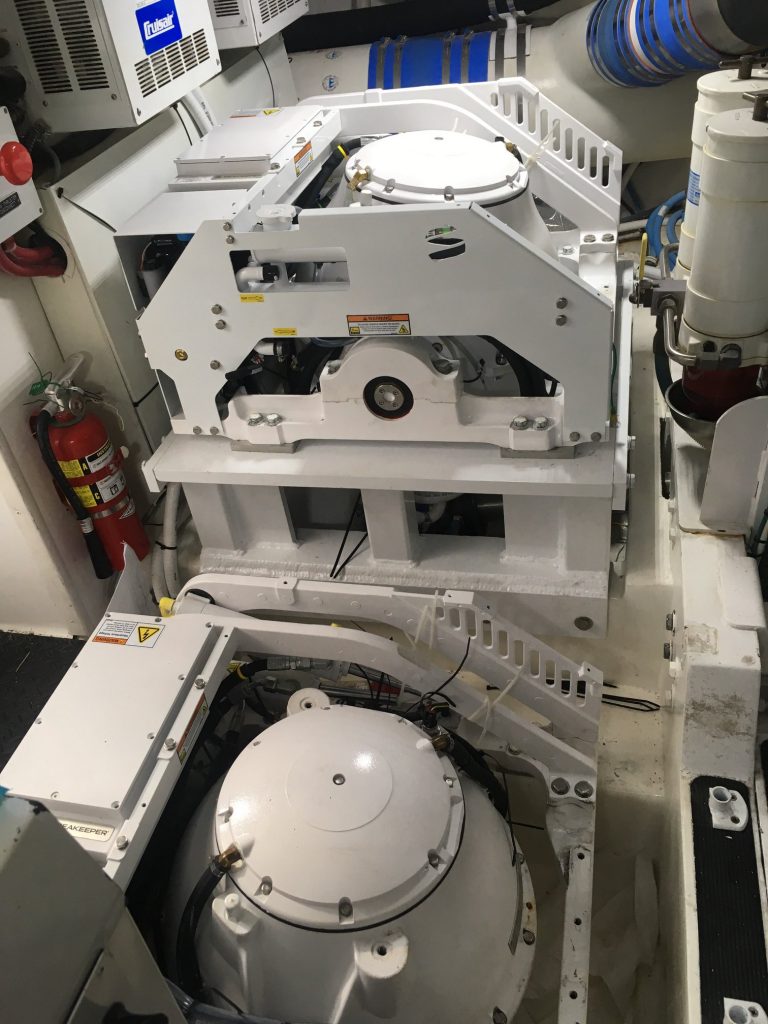
Right: A 56 Viking with two Seakeeper 6 units.
Refit done by Tri Sea Stabilizers.
WHY WOULD I NEED, OR WANT, MORE THAN ONE SEAKEEPER?
There are a few reasons a Dealer might suggest more than one Seakeeper:
- Space on board – Depending on what else you have onboard your boat, there may not be space for one larger Seakeeper unit, even if some equipment is moved around. This doesn’t necessarily mean you aren’t able to have Seakeeper stabilization. You may have room for two smaller units that will work together to provide the stabilizing power needed to stop the boat’s roll.
- More stabilization – Sometimes, a Dealer will provide you options when it comes to choosing your Seakeeper. For example, the Seakeeper 5 and Seakeeper 6 are the same footprint, but the Seakeeper 5 costs less for less stabilizing power. Let’s pretend a tournament fisherman opted for the Seakeeper 5 but is often out in rough weather and realized the 80% roll elimination he’s been getting is nice but could be better. The angler could opt to add another, smaller Seakeeper unit (like the Seakeeper 1 or Seakeeper 2) to the current setup and achieve a higher roll elimination, making captain and crew more comfortable on board.
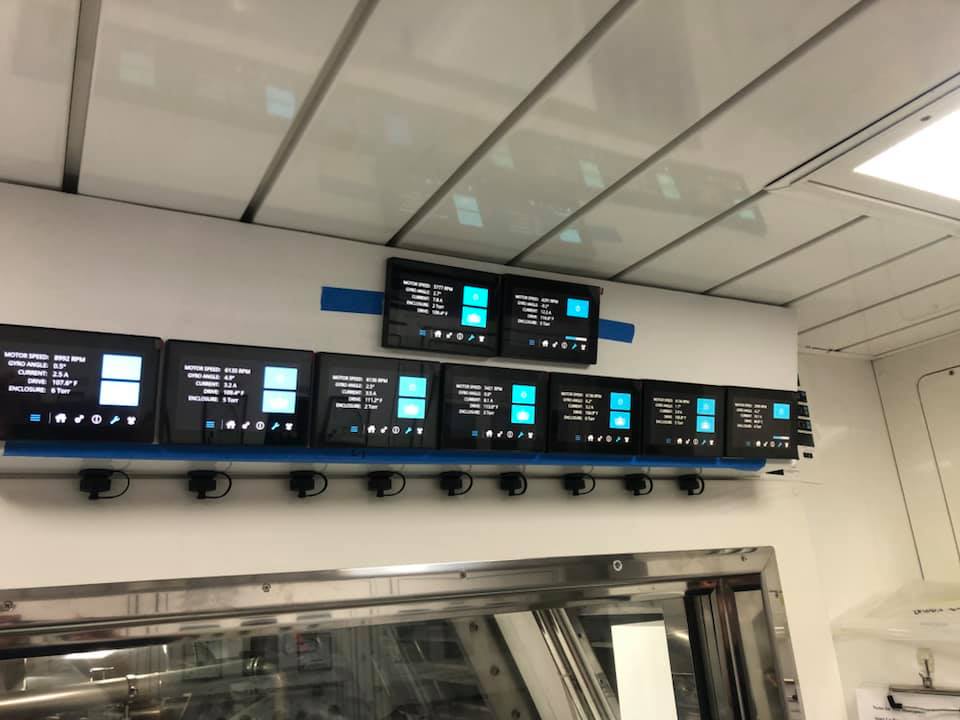
Left: This 165’ Mangusta had 7x Seakeeper 16 units and 2x Seakeeper 9 units. Each unit comes with its own 5-inch display so that the owner has operational and diagnostic information for each unit separately.
Refit done by Tri Sea Stabilizers.
WHAT’S RIGHT FOR MY BOAT?
Most people don’t opt for multiple units unless they need to, but you don’t have to worry about making the decision. Our certified Dealer network will help guide you to the stabilization options best for your boat and how you use it. You can always reach out to us directly, or find the Seakeeper Dealer nearest you for an installation quote!
Shopping for a Seakeeper?
Start here.
If you’re reading this, it probably means you’re interested in changing your boating experience for good! Not sure where to start? Let us help.
What makes a Seakeeper, a Seakeeper?
If you’re looking to stabilize your boat, you know there are options. So, what makes a Seakeeper special?
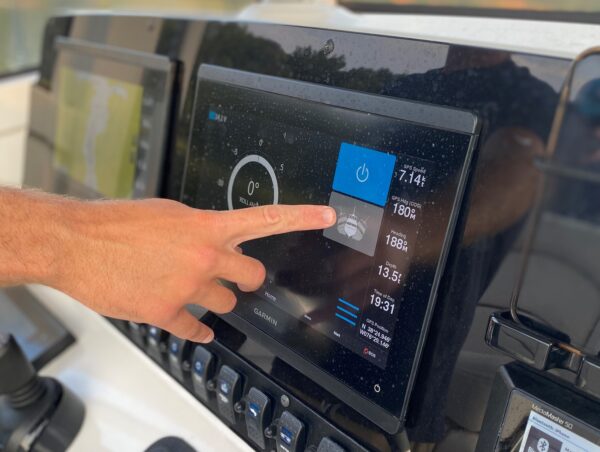
Will Seakeeper connect to my MFD?
Seakeeper is compatible with more than 100 multifunction displays. Find out if yours is on the list!